If you are wondering whether both spouses have to file for a California divorce, here is the direct answer: no. One spouse filing alone has always been enough to start a California divorce case, and that is still true today. What is new, as of January 1, 2026, is that agreeing spouses now also have the option to file together, though nothing requires it.
Key Takeaway: Only one spouse has to file to start a California divorce. That spouse files a Petition (Form FL-100), the other spouse is served and has 30 days to respond, and the case proceeds whether or not the responding spouse participates. Since January 1, 2026, spouses who agree on every term can instead file together on Form FL-700, skipping service entirely, but that is an additional option, not a requirement.
Short Answer: No, One Spouse Can File Alone
California has never required both spouses to sign or file anything to start a divorce. One spouse, called the petitioner, files a Petition, Form FL-100, with the county Superior Court, pays the filing fee, and has the other spouse formally served. From that point, the case is open and moving, regardless of whether the other spouse (the respondent) ever files a response.
This single-filer structure is why California is described as a no-fault divorce state: you do not need your spouse's permission, agreement, or even participation to get divorced. You need to meet the residency requirements, file the correct paperwork, and follow the process through to judgment.
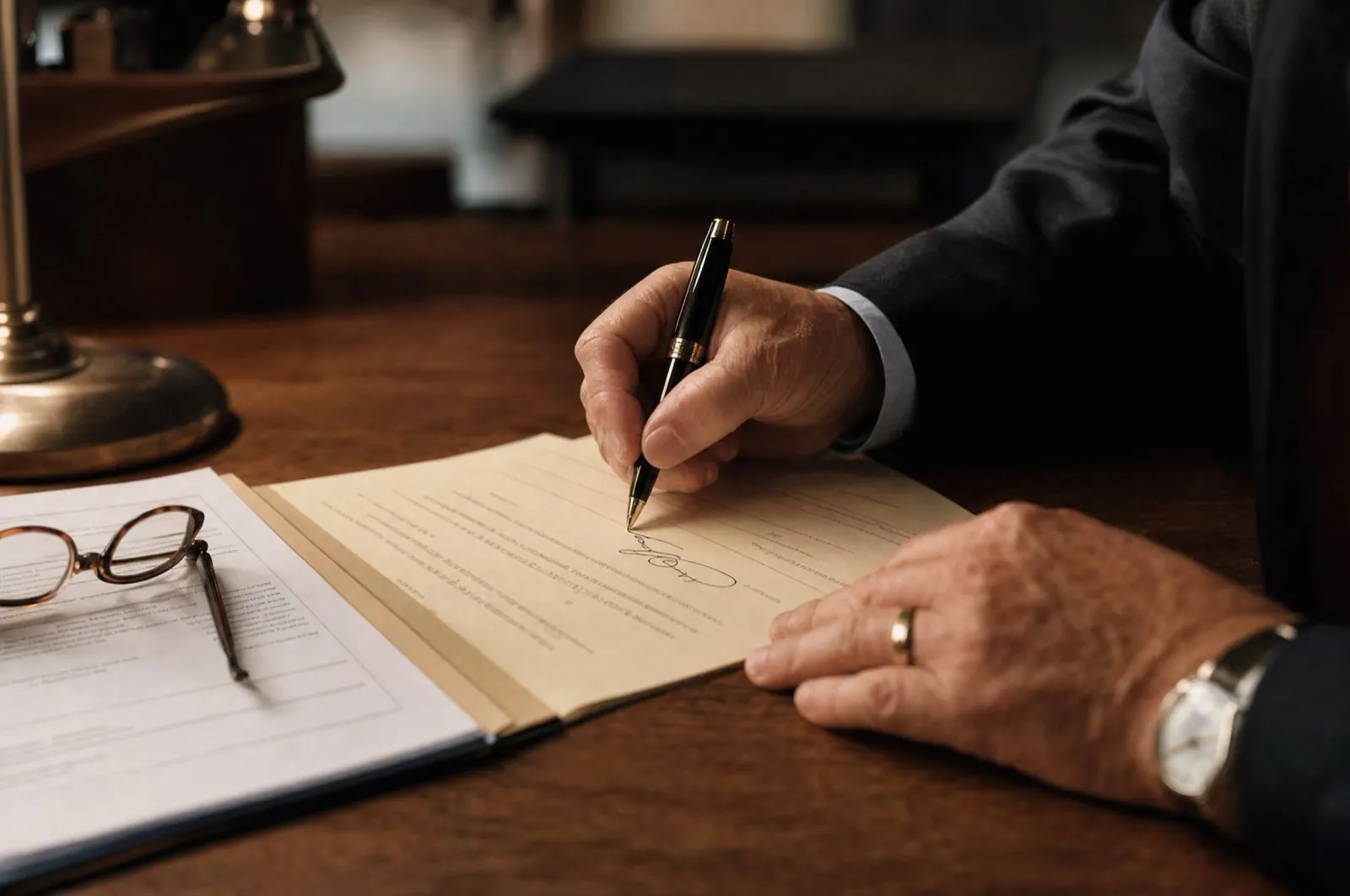
How Filing With Just One Spouse Works
Here is the traditional process, still the default and still fully available:
- One spouse files Form FL-100, the Petition for Dissolution (or Legal Separation), along with a Summons, Form FL-110, and pays the county filing fee, generally in the $435 to $450 range depending on the county.
- The other spouse is served. A person 18 or older who is not a party to the case delivers the papers, and a Proof of Service, Form FL-115, goes to the court.
- The respondent has 30 days to respond. They can file Form FL-120, or choose not to respond at all.
- The case proceeds either way. If the respondent participates, the case moves forward with both sides involved. If they do not respond within 30 days, the filing spouse can request their default and continue toward judgment without the other spouse's participation.
- Both spouses complete financial disclosures if the respondent is participating, and the case finishes with judgment paperwork once the 6 month waiting period (running from the date of service) has passed.
Notice what this process does not require: it never requires the second spouse to file anything, sign anything, or agree to anything, in order for the divorce to become final.
The New Option: Filing Together Since 2026
Starting January 1, 2026, Senate Bill 1427 added a second way to start a case: the Joint Petition, Form FL-700. Spouses who agree on every term of their divorce or legal separation can file together, appearing as Petitioner 1 and Petitioner 2, with no respondent at all.
The practical differences from filing alone:
- No service of process. The joint petition is deemed served on both spouses the instant it is filed, so there is no process server and no 30 day response window.
- One combined fee. The California Courts Self Help Guide lists the joint petition fee at $870, covering both spouses' court costs in a single payment, rather than two separate fees paid at different points.
- Full agreement required. Unlike filing alone, the joint petition only works if both spouses agree on every term before filing. It is not available if you disagree on anything.
- No temporary orders while pending. Neither spouse can ask the court for temporary custody, support, or other orders until the joint petition is either finalized by judgment or revoked.
For the full walkthrough of this newer path, see our guide, How to File a Joint Divorce Petition in California, and our explainer on what changed under SB 1427, or the deeper background in California Couples Can Now File for Divorce Together. If you file together and later need to back out, either spouse can revoke the joint petition using Form FL-720.
Which Situation Fits You
Use this to sort your situation quickly.
- Your spouse is unreachable, unwilling to cooperate, or you are not sure they will engage at all: filing alone (FL-100) is your only realistic path.
- You disagree about custody, support, or property, even partially: filing alone works; the joint petition does not, since it requires agreement on every term.
- You and your spouse agree on everything and are both willing to sign one petition together: either path works, and the joint petition (FL-700) may save you the cost and hassle of a process server.
- You think you might need a temporary court order for support or custody before your case is final: filing alone keeps that option open; the joint petition blocks it until you revoke.
- There has been domestic violence or a restraining order between you: filing alone is the standard, safer path; the Judicial Council's own instructions say the joint petition may not be right in that situation.
What If My Spouse Will Not Participate at All?
You can still get divorced. File Form FL-100 alone, have your spouse properly served, and wait out the 30 day response window. If they do not file a Response, you can request their default using Form FL-165 and move your case toward judgment without their participation, following the Declaration for Default or Uncontested Dissolution, Form FL-170.
This is the clearest reason the joint petition can never fully replace the traditional process: joint filing only works when both spouses actively cooperate. A spouse who refuses to engage cannot be part of a joint petition, but they also cannot block a divorce filed against them alone. California's no-fault structure means the case moves forward with or without their signature.
Does It Matter Which Spouse Files First?
Being the spouse who files, called the petitioner, does not give you extra rights over property, custody, or support. California is a community property state, and the court divides assets, debts, custody, and support based on the facts of your situation, not on who filed the paperwork first. Filing first mainly determines a few procedural details: which spouse's name appears first on the case, who is responsible for arranging service, and whose local Superior Court hears the case if you and your spouse live in different counties.
That said, filing first does have practical value. The spouse who files controls the timeline of when the case opens and the 6 month waiting period begins running, at least under the traditional process. If you are ready to move forward and your spouse is delaying, filing on your own gets the clock started rather than waiting indefinitely for a joint decision.
Side-by-Side: Filing Alone vs Filing Together
| Filing alone (FL-100) | Filing together (FL-700) | |
|---|---|---|
| Who has to file | One spouse only | Both spouses, together |
| Other spouse's participation | Optional; case proceeds even by default | Required; the process is built on cooperation |
| Service of process | Required; a third party serves the other spouse | None; deemed served on both at filing |
| Response deadline | 30 days for the served spouse | None; there is no respondent |
| Works if you disagree | Yes | No; requires agreement on every term |
| Temporary orders available | Yes, at any time | No, not while the joint petition is pending |
| Filing fee | Generally $435 to $450 for the filer; a separate fee if a Response is filed | $870 total, covering both spouses |
| Available since | Always | January 1, 2026 |
For a deeper comparison of cost, speed, and flexibility between the two routes, see Joint Petition vs Regular Divorce Petition in California.
Frequently Asked Questions
Do we both have to file for divorce in California?
No. California has always allowed one spouse to file for divorce alone, using Form FL-100. That spouse becomes the petitioner, the other spouse is served and becomes the respondent, and the case moves forward whether or not the other spouse participates. Since January 1, 2026, spouses who agree also have the option to file together on Form FL-700, but that option is not required. Either spouse can start a California divorce case on their own.
What happens if my spouse refuses to sign anything?
You can still get divorced. If you file a Petition (FL-100) alone and your spouse is properly served but does not file a Response within 30 days, you can ask the court to enter their default, using Form FL-165, and finish the case without their participation. California is a no-fault divorce state, so your spouse cannot legally block the divorce simply by refusing to engage; they can only affect how contested individual terms get decided.
Can only one spouse file if we actually agree on everything?
Yes. Agreement does not require joint filing. Many fully agreed California divorces still start with one spouse filing FL-100 and the other filing a matching FL-120 Response, then both sides submitting a written settlement together. Filing together on Form FL-700 is simply a newer, additional option for agreeing couples, available since January 1, 2026, not the only way to finish an uncontested case.
Is it better for one spouse to file alone or for both to file together?
It depends on whether you agree on every term and whether you expect to need the court's help before judgment. Filing together removes service of process and the response deadline, but only works with full agreement and blocks either spouse from requesting temporary orders while the joint petition is pending. Filing alone works whether you agree or not, and either spouse can ask for temporary orders at any time. Neither path is generally better; they fit different situations.
Does filing alone cost more than filing together?
The court costs are similar rather than dramatically different. The joint petition filing fee is $870, covering both spouses' court costs in one payment. In the traditional process, the filing spouse pays an individual fee (generally $435 to $450 depending on the county), and the responding spouse pays their own separate fee only if they file a Response. Fee waivers are available on both paths using Form FW-001 for spouses who cannot afford the fee.
How Virdix Helps, Whichever Path You Take
Whether you are filing alone or filing together, the paperwork needs to be complete, consistent, and ready for your county Superior Court to accept. Virdix prepares California divorce documents for both situations:
- Guided questionnaire, plain-language prompts built on the official Judicial Council forms, whether you need FL-100 or FL-700
- Works for one filer or two, so you are not forced into a joint process that does not fit your situation
- Consistency across the packet, names, dates, and property carry through every form
- County guidance, see our California divorce guides by county for local court details
We are a document preparation service, not a law firm, and cannot tell you which path is legally right for your situation. For that judgment call, consult a licensed California family law attorney. Once you know your path, Virdix helps you get the paperwork done correctly.
Start Your California Divorce Paperwork →
This article is for informational purposes only and does not constitute legal advice. Virdix is a document preparation service, not a law firm, and does not provide legal advice. For advice about your specific situation, consult a licensed California family law attorney.
Sources: California Courts Self Help Guide, Joint Petition, Form FL-700-INFO, Senate Bill 1427 (Chapter 190, Statutes of 2024), Judicial Council of California