No, Florida does not have legal separation as a formal legal status. There is no petition that makes you "legally separated" the way some other states allow, and no in-between status between married and divorced under Florida law. What Florida does have is a handful of tools people reach for when they search "legal separation": a support case that does not end the marriage, private separation agreements, and the simple fact that spouses can live apart without any court involvement at all.
Quick Answer: No. Florida does not recognize legal separation as a distinct legal status. Instead, Florida offers support unconnected with dissolution of marriage (Fla. Stat. § 61.09) for spouses who need financial support without ending the marriage, and allows couples to sign private separation or postnuptial agreements. Living apart, on its own, does not create any special legal status in Florida.
Short Answer: No Legal Separation in Florida
Florida recognizes exactly two marital statuses under Chapter 61 of the Florida Statutes: married, and divorced (the statute calls it "dissolution of marriage"). There is no third status, no "legal separation" petition, and no court order that formally separates a married couple while leaving the marriage intact.
If you search "legal separation in Florida" hoping to find a form to file, you will not find one, because it does not exist here. That does not mean you have no options. It means the specific thing people usually want when they ask this question is covered by other, more specific Florida legal tools.
Why Florida Has No Legal Separation Status
Some states created a formal legal separation process as a distinct alternative to divorce, sometimes because divorce was historically harder to obtain, or because a state's residency or fault rules made separation a practical first step. Florida took a different approach. It is a no-fault dissolution state: either spouse can file for divorce once the 6-month residency requirement is met, by stating the marriage is irretrievably broken, without waiting out any prior separation period and without proving fault.
Because Florida never required a waiting or separation period as a precondition to divorce, it never built a parallel "legal separation" track the way some states did. Instead, the specific needs that legal separation addresses in other states (support while still married, dividing responsibilities, protecting property) are handled through other, targeted Florida statutes and private agreements, covered below.
What People Are Actually Looking For
When someone searches "does Florida have legal separation," they are usually trying to solve one of a few specific problems, not asking a purely academic question about Florida law:
- They need financial support from a spouse but are not ready to end the marriage
- They want to keep a shared health insurance plan or other marriage-dependent benefit
- Religious or personal beliefs make divorce something they want to avoid or delay
- They want to live apart and "test" separation before deciding whether to divorce
- They want some formal record of when they started living separately
Florida law has an answer for some of these, but not through a single "legal separation" status. The sections below cover what actually exists.
Support Without Divorce: Fla. Stat. § 61.09
Florida's closest equivalent to a support-focused legal separation is a case for support unconnected with dissolution of marriage, sometimes called separate maintenance. It is authorized by Florida Statute § 61.09, which reads:
"If a person having the ability to contribute to the maintenance of his or her spouse and support of his or her minor child fails to do so, the spouse who is not receiving support may apply to the court for alimony and for support for the child without seeking dissolution of marriage, and the court shall enter an order as it deems just and proper." (Fla. Stat. § 61.09)
In plain terms: if your spouse can afford to support you or your shared minor children and is not doing so, you can ask a Florida court to order that support directly, without asking the court to end the marriage. This is a real, separate court case, filed using Florida Family Law Form 12.904 (Petition for Support Unconnected with Dissolution of Marriage), with its own petition, hearing, and final judgment, but the marriage itself stays intact.
This is not the same thing as legal separation. It does not divide property, does not address custody arrangements the way a divorce with a parenting plan would, and does not change your marital status. It exists specifically to address one problem: a spouse withholding support while the marriage continues.
Private Separation and Postnuptial Agreements
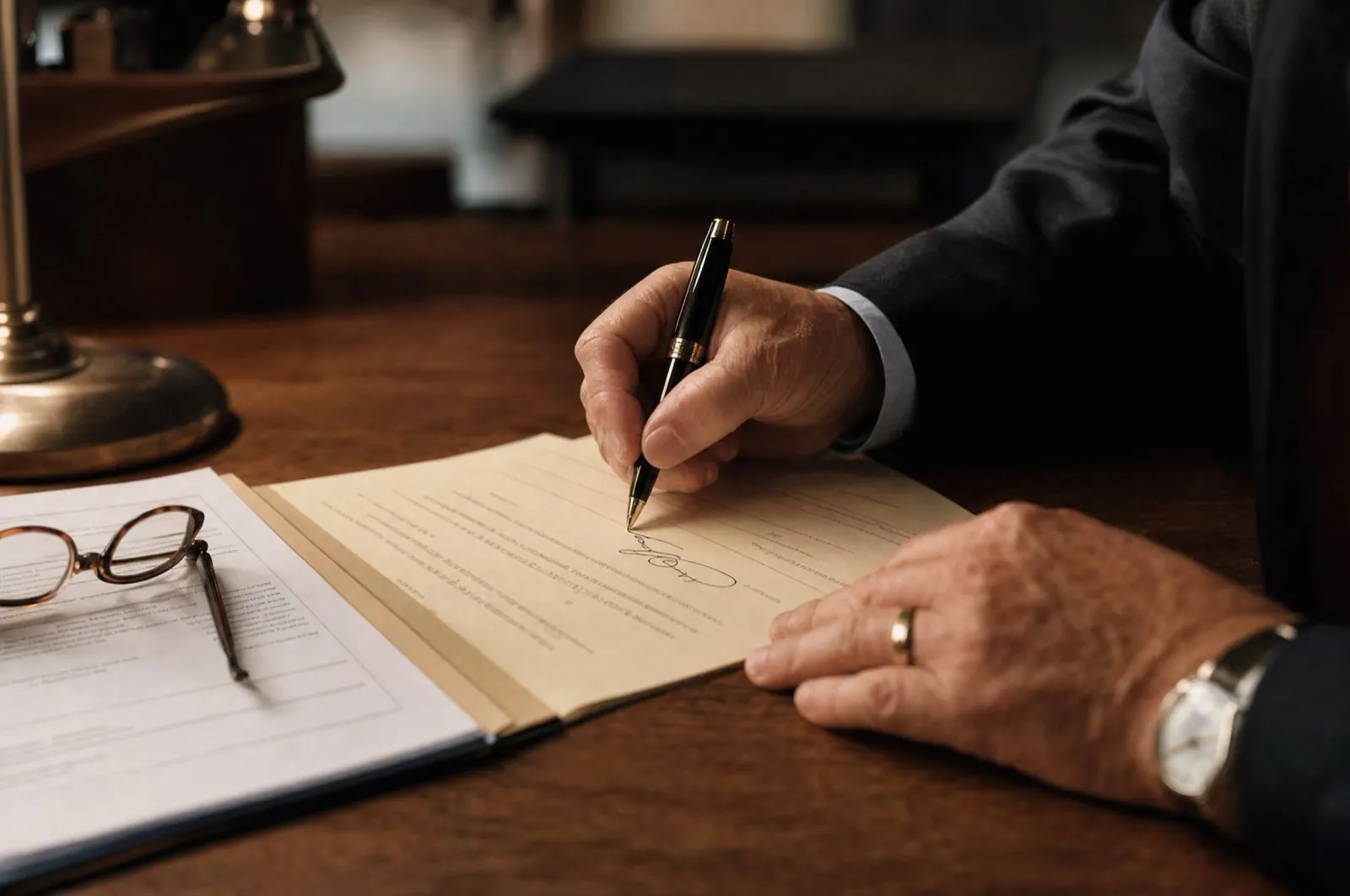
Florida does not prohibit married couples from privately agreeing, in writing, on how they will handle finances, property, and responsibilities while remaining married, sometimes called a postnuptial or separation agreement. This is a private contract between spouses, not a court filing, and Florida has no dedicated Family Law Rules of Procedure form for one, unlike the Marital Settlement Agreement (Form 12.902(f)) used inside a dissolution case.
One place a written separation agreement does have specific legal weight is in a later divorce. Florida's equitable distribution statute, Fla. Stat. § 61.075(7), sets the date used to sort marital from nonmarital assets and liabilities as:
"The earliest of the date the parties enter into a valid separation agreement, such other date as may be expressly established by such agreement, or the date of the filing of a petition for dissolution of marriage." (Fla. Stat. § 61.075(7))
In other words, without a valid written separation agreement, the cutoff date Florida courts use for identifying marital property is the date a dissolution petition is filed, not whenever you happened to move out or start living separately. A signed separation agreement is one of the few ways to move that date earlier.
Staying Married but Living Apart: What Changes and What Doesn't
Many Florida couples simply live apart, informally, with no court filing of any kind. This is legal and requires no permission or paperwork. It is worth being clear about what this does and does not do under Florida law:
- It does **not** end the marriage or change your legal marital status
- It does **not**, by itself, shift the date used for dividing marital property, absent a written separation agreement under Fla. Stat. § 61.075(7)
- It does **not** start any statutory clock toward a Florida divorce; Florida has no required separation period before either spouse can file
- It does **not** automatically address support; if you need enforceable support, you generally need either a separate maintenance case under Fla. Stat. § 61.09, a written agreement, or a filed dissolution
If You Decide to Move Forward With Divorce Instead
If what you actually need is to end the marriage rather than remain separated indefinitely, Florida's dissolution of marriage process is the path that changes your legal status. Depending on your situation, that can mean the simplified dissolution track for couples who agree on everything and have no minor or dependent children, or the standard dissolution process otherwise. See our guides on How to File for Divorce in Florida and Simplified vs. Regular Dissolution of Marriage in Florida for how each track works.
Common Mistakes to Avoid
- Assuming living apart, on its own, creates any formal legal status in Florida
- Believing you must be separated for a set period before you are allowed to file for divorce in Florida (not required)
- Filing a support unconnected with dissolution case (Fla. Stat. § 61.09) expecting it to divide property or address custody the way a divorce does
- Relying on a verbal separation agreement instead of a signed written one, which is what Fla. Stat. § 61.075(7) requires to shift the marital property cutoff date
- Assuming a private separation agreement is automatically enforceable in a later divorce without addressing it properly in that case
Frequently Asked Questions
Does Florida have legal separation?
No. Florida is one of the states that does not recognize "legal separation" as a distinct legal status. There is no petition you file to become "legally separated," and no court order that gives you a separated-but-still-married status the way divorce gives you a dissolved-marriage status. Florida law only recognizes two positions: married, or divorced (dissolved) under Chapter 61 of the Florida Statutes.
What is "separate maintenance" in Florida?
Separate maintenance, sometimes called support unconnected with dissolution, is a Florida court case where a spouse who is not being financially supported asks the court to order alimony or child support without asking the court to end the marriage. It is authorized by Fla. Stat. § 61.09 and uses the Florida Family Law Form 12.904 series (Petition for Support Unconnected with Dissolution of Marriage). You remain legally married when the case concludes.
Can I get spousal support without filing for divorce in Florida?
Yes, if your spouse has the ability to support you and is not doing so. Fla. Stat. § 61.09 lets a spouse in that situation apply to the court for alimony and, if applicable, child support, without seeking a dissolution of marriage. The court enters an order it finds just and proper based on the facts of the case.
Do I need to be separated for a certain amount of time before I can file for divorce in Florida?
No. Unlike some states, Florida does not require spouses to live apart for a set period before either one can file a petition for dissolution of marriage. Florida is a no-fault state, so a petition can be filed once you meet the 6-month residency requirement and can state the marriage is irretrievably broken. What Florida does require is a minimum 20-day gap between the date you file the petition and the date a final judgment can be entered, under Fla. Stat. § 61.19.
Does living apart before filing affect how property is divided in a later Florida divorce?
Generally, Florida identifies marital versus nonmarital assets and liabilities as of the date a dissolution petition is filed, not the date spouses started living apart. Fla. Stat. § 61.075(7) sets one exception: if the spouses have entered into a valid, written separation agreement, the cutoff date can instead be the date of that agreement, or another date the agreement expressly sets. Without a written agreement, informally moving out does not, by itself, change the cutoff date.
Can married couples in Florida sign a separation or postnuptial agreement?
Yes. Florida law does not prohibit spouses from entering into a private written agreement covering how they will handle finances, property, or support while remaining married. These are contracts between the spouses, not court orders, and Florida has no dedicated Family Law Rules of Procedure form for a standalone postnuptial or separation agreement outside of a filed dissolution case.
Can Virdix help me with a Florida separation situation?
Virdix currently prepares the Florida Family Law Rules of Procedure forms used in a dissolution of marriage case, such as the petition, financial affidavit, and marital settlement agreement. If you decide dissolution is the right step for your situation, Virdix can help you prepare that paperwork. Virdix is a document preparation service, not a law firm, and does not provide legal advice about whether separation, separate maintenance, or divorce fits your circumstances.
How Virdix Helps
Virdix prepares the Florida Family Law Rules of Procedure forms used in a dissolution of marriage case, from the petition through the financial affidavit and marital settlement agreement. If you decide that ending the marriage, rather than staying separated indefinitely, is the right next step, Virdix's guided questionnaire turns that process into plain-language questions instead of blank court forms. Start free. Pay once, only when your documents are ready.
Start Your Florida Case Free →
This article is for informational purposes only and does not constitute legal advice. Virdix is a document preparation service, not a law firm, and does not provide legal advice. Statutes and procedures can change; always confirm current information with the Florida Courts, the Florida Statutes, or your circuit court clerk. For advice about your specific situation, consult a licensed Florida attorney.
Sources: Florida Courts (flcourts.gov), Chapter 61, Florida Statutes, including §§ 61.09 and 61.075