

Get your California divorce papers without the $15,000 attorney.
You answer questions. Virdix picks and fills the California forms.
Rejected by the clerk? We fix it free, guaranteed.
 Rejected by the clerk? We fix it free, guaranteed.
Start free. $79 once. Court filing fees separate.
What we do
Every California divorce paper you need is on Virdix.
You answer plain questions. Virdix completes the official forms your case needs, checks them the way a clerk would, and tells you where to file in your county. Starting is free.
About your children
Do you and the other parent have minor children together?
Get your actual form list, not a generic one.
Answer a few questions and Virdix identifies which California divorce papers apply to your case, then prepares them, with previews of your completed documents before you pay anything.
Get startedIf a clerk rejects a document, we fix it free until it's accepted. Learn more
Why people choose Virdix
Documents ready instantly
Your forms are produced automatically as you answer. No waiting days for someone to prepare them, no mail, nothing to chase.
One flat price, upfront
Start free and see everything first. $79 once when your documents are ready. No retainers, no hourly billing, no hidden fees.
A personalized form list
Virdix identifies which forms apply to your case, from the initial Petition through judgment, instead of a generic checklist you have to interpret yourself.
All 58 California counties
Filing instructions matched to your county's Superior Court: where to file, how many copies, and any local requirements.
A record you can update
If a form gets rejected or your situation changes, you return to the relevant section, update your answers, and regenerate the form rather than starting over.
Rejected by the clerk? We fix it free, guaranteed
If a court clerk rejects a document we prepared, we fix it for free until it's accepted.
A case manager, included.
Answers your questions about the process and filing, and emails you when the review finds something.
How it works
We don't just give you forms. We walk you through the entire family court process, educating you along the way.
About your children
Do you and the other parent have minor children together?
Tell us about your case
Answer simple questions about your situation. We'll determine exactly what documents you need for your county.
About your children
Do you and the other parent have minor children together?
Build your documents
Use our guided builders for declarations, parenting plans, and settlement agreements. Our builders organize what happened into clear, complete documents.
Your words
on march 15 he kept the kids past the 6pm exchange time in our court order again and didn't answer either of my two calls
Court-ready version
On March 15, Respondent failed to return the children at the court-ordered exchange time of 6:00 p.m. and did not respond to my two phone calls.
AI Suggestion
Add the actual return time and any witnesses so your account is complete.
File and serve
Get step-by-step filing instructions for your courthouse. We guide you through serving the other party.
Complete your case
Navigate hearings, responses, and final judgments with guidance at every step until your case is resolved.
Compare your options
Three ways to get your divorce papers filled out

- Personalized form list from your answers
- Documents produced instantly as you answer
- County-specific filing instructions included
- Update and regenerate a form if your case changes
$79Once, when your documents are ready. Free to start.
Other online services
- Blank forms only, no guidance on which apply
- Days, sometimes a week, before your forms come back
- No county-specific filing instructions
- Starting over if a form gets rejected
$400 to $2,000Typical published rates. Most hand you a generic packet rather than a form list matched to your case.
Traditional attorney
- Retainers up front, then hourly billing
- Conflict escalates through opposing attorneys
- Scheduling delays can stretch for months
- You wait on someone else for every document
$5,000+Attorney-represented California family law cases commonly run $5,000 to $15,000.
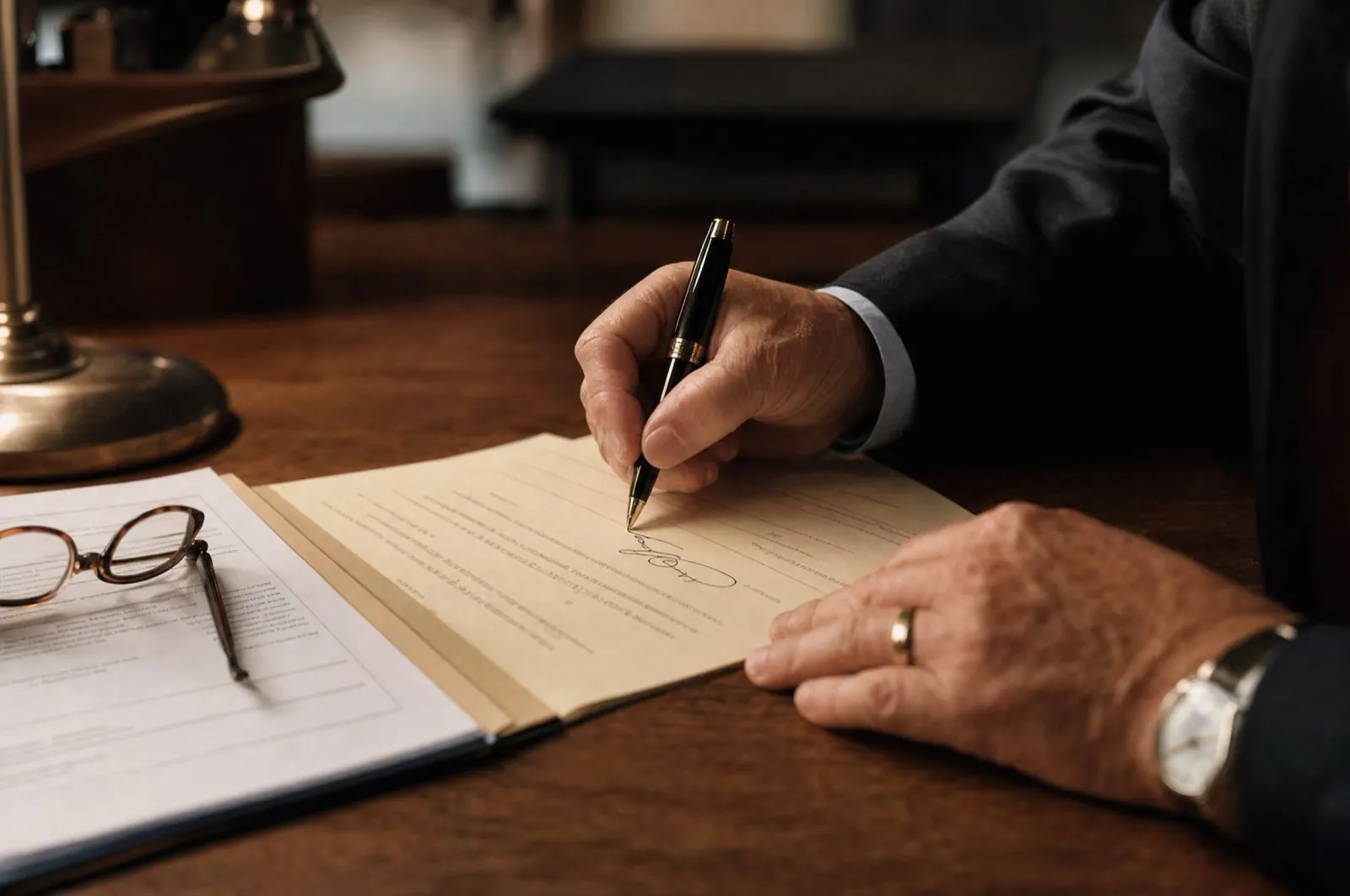
File for divorce without the $15,000 attorney.
Explore our divorce papers resources
Full California divorce forms library
Read now
Full step-by-step filing guide
Read now
How to fill out FL-115, Proof of Service
Read nowWant a personalized list across every case type, including custody and support? Use the free forms wizard.
Divorce papers questions
What is the very first divorce paper I need to file in California?+
Form FL-100, Petition, Marriage/Domestic Partnership, is the document that officially starts your case. It's filed together with form FL-110, Summons, which notifies your spouse and puts automatic temporary restraining orders on both spouses' finances and the children, if any.
What divorce papers does the responding spouse file?+
The Respondent files form FL-120, Response, Marriage/Domestic Partnership, within 30 days of being served. If there are minor children, FL-105 (Declaration Under UCCJEA) is also required from whichever spouse hasn't already filed it.
What financial disclosure papers are required?+
Both spouses must complete FL-140 (Declaration of Disclosure), FL-150 (Income and Expense Declaration), and FL-142 (Schedule of Assets and Debts) or FL-160 (Property Declaration). These are required in every California divorce, contested or uncontested.
What paper finalizes a California divorce?+
Form FL-180, Judgment, is what the judge signs to finalize your case, along with FL-190, Notice of Entry of Judgment, which notifies both spouses once it's officially entered. These can only be submitted after the mandatory 6-month waiting period has passed.
Does Virdix give me blank forms or completed ones?+
Virdix fills out the official California Judicial Council forms based on your answers to a guided interview. You review everything before it's finalized, so you're not staring at a blank PDF trying to figure out what goes in each field. Virdix is not a law firm and does not give legal advice about what to put in a field beyond your own facts.
Divorce papers by stage of your case
Each guide below walks through that specific form, field by field. Virdix itself works the way tax software works: answer plain-English questions, get finished, court-ready forms.
Starting the case
Serving and responding
Financial disclosures
Want the complete list across every case type, including custody, support, and restraining orders? See the full California divorce forms library, or use the free forms wizard to get a personalized list.
What these papers cost, compared
| Cost | Typical range |
|---|---|
| Court filing fee | $435 to $450, or $0 with a fee waiver |
| Legal Document Assistant | $150 to $225/hr, or $239 to $3,000+ flat fee |
| Attorney, full representation | $5,000 to $15,000, more if contested |
| Virdix guided platform | $79 launch price, $349 after October 31 |
Form numbers and requirements are current Judicial Council of California forms as of this writing and are subject to change; confirm current forms at courts.ca.gov before filing.
Virdix is a self-help document preparation service, not a law firm, and does not provide legal advice. If your case involves domestic violence or you fear for your safety, call 911 or the National Domestic Violence Hotline at 1-800-799-7233.