
Florida's simplified dissolution of marriage is a shorter, more direct path to divorce, built for spouses who have already worked out the terms between themselves. It skips the discovery and negotiation stages of a regular case in exchange for one requirement: both spouses agree on everything, in writing or out loud, and both are willing to say so in front of a judge at the same time.
What This Guide Covers: Who qualifies for a Florida simplified dissolution of marriage, the forms involved, how residency is proven, what the filing fee and indigent status waiver look like, and what actually happens at the final hearing.
What Is a Simplified Dissolution of Marriage?
A simplified dissolution of marriage is a Florida divorce procedure for couples who agree their marriage is over, have no minor or dependent children together, and have already divided what they own and what they owe. {/* source: https://flcourts-media.flcourts.gov/content/download/685807/file_pdf/12.901a.pdf */}
Instead of a Petition filed by one spouse and a Response filed by the other, both spouses sign a single Joint Petition for Simplified Dissolution of Marriage, Florida Family Law Rules of Procedure Form 12.901(a). Both spouses also agree to give up the right to a trial and an appeal, and both attend one final hearing together. {/* source: https://flcourts-media.flcourts.gov/content/download/685807/file_pdf/12.901a.pdf */}
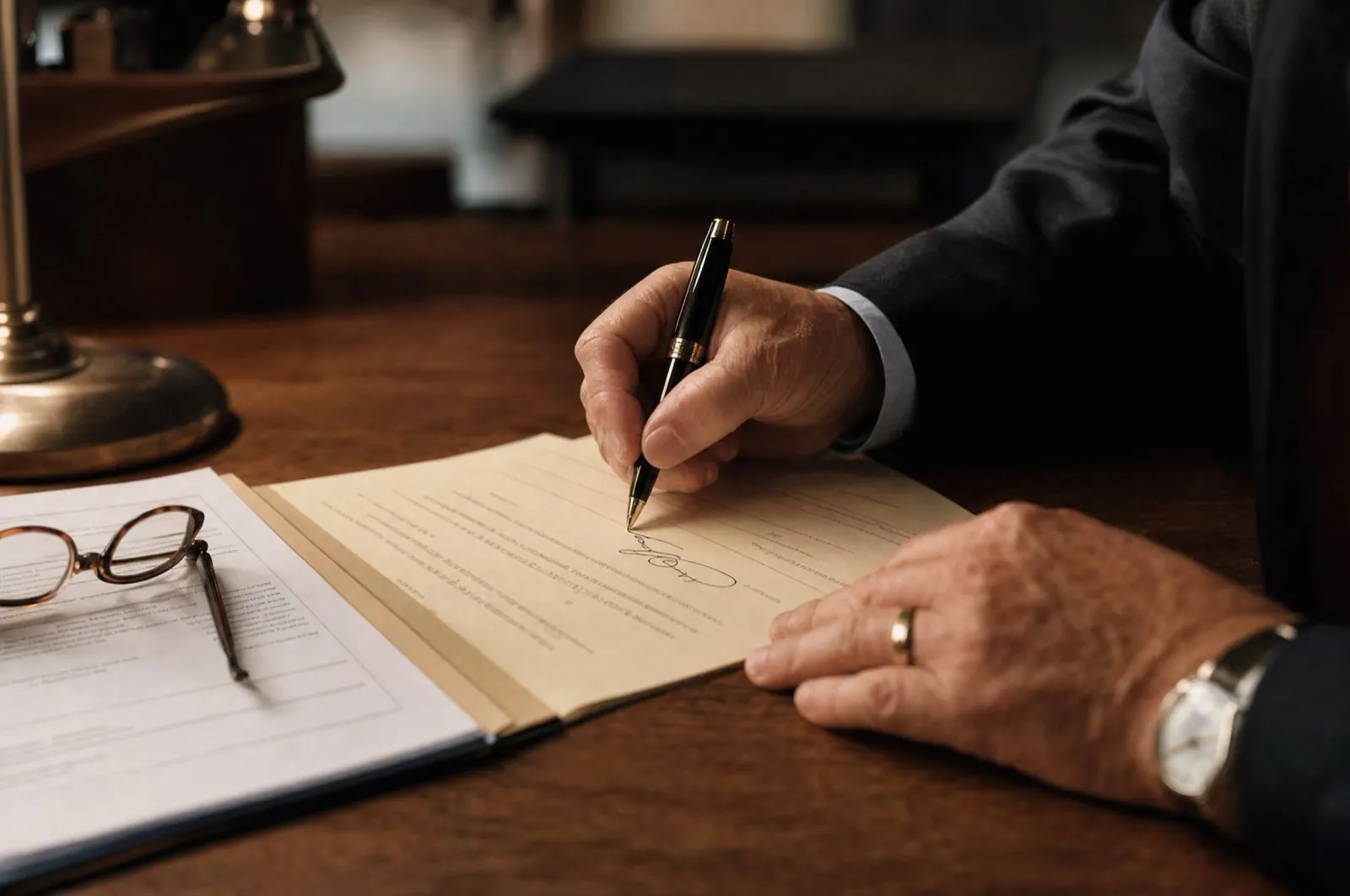
Who Qualifies for a Simplified Dissolution
Florida's instructions for Form 12.901(a) lay out the full eligibility list. A simplified dissolution is available when all of the following are true: {/* source: https://flcourts-media.flcourts.gov/content/download/685807/file_pdf/12.901a.pdf */}
- Both spouses agree the marriage cannot be saved
- There are no minor or dependent children together, no minor or dependent children born to the wife during the marriage, and the wife is not currently pregnant
- Both spouses have already worked out how their assets and liabilities are divided, and both are satisfied with that division
- Neither spouse is seeking alimony from the other
- Both spouses are willing to give up the right to trial and appeal
- Both spouses have signed the petition
- Both spouses are willing to attend the final hearing together
One spouse or the other must also have lived in Florida for at least six months before the petition is filed. {/* source: https://flcourts-media.flcourts.gov/content/download/685807/file_pdf/12.901a.pdf */}
What Disqualifies a Couple
The eligibility list runs in both directions: when any one item is not true, the simplified process is not available, and a regular petition for dissolution of marriage applies instead. {/* source: https://flcourts-media.flcourts.gov/content/download/685807/file_pdf/12.901a.pdf */}
A minor or dependent child of the marriage, a pregnancy, a request for alimony, an unresolved disagreement over property or debt, or one spouse's unwillingness to attend the joint hearing are each, on their own, enough to move a case out of the simplified track. This guide is scoped to the simplified process only; a contested case, or one involving custody, injunctions, or a request to modify an existing order, follows different Florida procedures entirely.
Forms Required
| Form | Purpose | Required? |
|---|---|---|
| 12.901(a) | Joint Petition for Simplified Dissolution of Marriage | Always |
| 12.902(f)(3) | Marital Settlement Agreement for Simplified Dissolution of Marriage | Only if the agreement is in writing; an oral agreement can be used instead |
| 12.928 | Family Court Cover Sheet | Always |
| Application for Determination of Civil Indigent Status | Requests a waiver of filing fees | Only if the filing fee cannot be paid |
| Affidavit of Corroborating Witness, Form 12.902(i) | Proves Florida residency through a witness | Only if residency is proven this way rather than by ID or testimony |
| 12.990(a) | Final Judgment of Simplified Dissolution of Marriage | Completed at or before the final hearing, depending on the circuit |
The written settlement agreement is optional. The instructions for Form 12.901(a) allow the agreement to be documented in writing on Form 12.902(f)(3), or handled as an oral agreement that both spouses confirm at the hearing. {/* source: https://flcourts-media.flcourts.gov/content/download/685807/file_pdf/12.901a.pdf */}
Proving Florida Residency
Florida requires proof that one spouse has lived in the state for more than six months before the petition was filed. The instructions for Form 12.901(a) list three accepted ways to prove this: {/* source: https://flcourts-media.flcourts.gov/content/download/685807/file_pdf/12.901a.pdf */}
- A valid Florida driver's license, Florida identification card, or voter registration card issued to either spouse at least six months before filing
- Testimony from another person who knows either spouse has lived in Florida for more than six months and is available to testify in court
- An Affidavit of Corroborating Witness, Form 12.902(i), signed by someone who can attest to the six-month residency, either before the clerk or before a notary public
Filing Fee and the Civil Indigent Status Waiver
Filing fees for dissolution of marriage cases are set at the county level, so the exact figure varies by circuit. Flagler County's clerk lists the filing fee for both regular and simplified dissolution of marriage as $408, and notes the fee is not refunded even if the spouses later reconcile and the case is dismissed. {/* source: https://flaglerclerk.gov/courts/family-court/dissolution-of-marriage/ */}
Filing fees are set by each county's clerk of the circuit court and can differ from one circuit to the next. Confirming the current fee with the specific county where the petition will be filed is the only way to know the exact amount.
When the filing fee is out of reach, Florida allows an Application for Determination of Civil Indigent Status to be filed alongside the petition. Under Florida Statute 57.082, an applicant is considered indigent when household income is at or below 200 percent of the federal poverty guidelines for their household size. A net equity of $2,500 or more in property creates a presumption against indigent status, though this presumption excludes a homestead and one vehicle worth $5,000 or less. {/* source: https://www.flsenate.gov/laws/statutes/2025/57.082 */}
The clerk reviews the application against these standards and determines whether filing fees, the cost of a summons, and sheriff's service fees are waived. {/* source: https://flcourts-media.flcourts.gov/content/download/685807/file_pdf/12.901a.pdf */}

Step-by-Step: Filing Through the Final Hearing
The instructions for Form 12.901(a) describe the process in six stages: {/* source: https://flcourts-media.flcourts.gov/content/download/685807/file_pdf/12.901a.pdf */}
- Complete and sign the petition. Both spouses sign Form 12.901(a), typed or printed in black ink.
- File with the clerk. The petition is filed with the clerk of the circuit court in the county where either spouse lives, along with a copy of the settlement agreement (Form 12.902(f)(3)) if the agreement is in writing.
- Prove residency. Proof that one spouse has lived in Florida for more than six months is submitted using an ID, witness testimony, or an affidavit of corroborating witness.
- Pay the filing fee, or apply for a waiver. The filing fee is paid to the clerk, or an Application for Determination of Civil Indigent Status is submitted with the petition.
- Complete the cover sheet. A Family Court Cover Sheet, Form 12.928, is completed; the clerk's office provides this form.
- Attend the final hearing. A hearing date is set, either through the clerk or the court directly. Both spouses attend together, and, depending on the circuit, either bring a completed Final Judgment of Simplified Dissolution of Marriage (Form 12.990(a)) or have it prepared at the hearing.
If this procedure is not completed, the case may be dismissed by the court. {/* source: https://flcourts-media.flcourts.gov/content/download/685807/file_pdf/12.901a.pdf */}
The Final Hearing
The final hearing is where a simplified dissolution actually becomes final. Both spouses testify about what is in the petition, and if the paperwork is in order, the judge may sign the Final Judgment of Simplified Dissolution of Marriage, ending the marriage under the simplified procedure. {/* source: https://flcourts-media.flcourts.gov/content/download/685807/file_pdf/12.901a.pdf */}
Flagler County's clerk notes that failure of either spouse to appear at the hearing can result in the case being dismissed, which is part of why the process depends on both spouses' willingness to show up together, not just their agreement on paper. {/* source: https://flaglerclerk.gov/courts/family-court/dissolution-of-marriage/ */}

Common Mistakes to Avoid
- Assuming the simplified process applies with a minor child in the picture; any minor or dependent child of the marriage, or a current pregnancy, removes eligibility
- Leaving the residency proof out of the filing, which the clerk cannot process without
- Treating the settlement agreement as settled without documenting it in writing or being ready to confirm it orally at the hearing
- Assuming only one spouse needs to appear at the final hearing
- Missing the filing fee or the indigent status paperwork, which can stall the case at intake
- Confusing simplified dissolution with a contested case; if alimony, custody, or property division becomes disputed, the case no longer fits the simplified track
Frequently Asked Questions
What is a simplified dissolution of marriage in Florida?
It is a streamlined version of Florida's divorce process for spouses who agree the marriage cannot be saved, have no minor or dependent children together, have already divided their property and debts, and are not seeking alimony from each other. Both spouses sign a joint petition, Florida Family Law Rules of Procedure Form 12.901(a), and both attend a single final hearing together.
Who can use the simplified dissolution process in Florida?
Spouses who meet every one of the eligibility criteria: agreement that the marriage is irretrievably broken, no minor or dependent children of the marriage and no pregnancy, a completed agreement on dividing assets and liabilities, no request for alimony, a willingness to give up the right to trial and appeal, and a willingness to attend the final hearing together.
How much does it cost to file for a simplified dissolution in Florida?
Filing fees are set by the clerk of the circuit court and vary somewhat by county. In Flagler County, for example, the filing fee for both regular and simplified dissolution of marriage is $408, and it is not refundable if the spouses later decide to reconcile and dismiss the case. Confirming the exact current fee with the county where the case will be filed is the reliable way to know the amount in advance.
What if a couple cannot afford the filing fee?
Florida allows an Application for Determination of Civil Indigent Status to be filed along with the petition. Under Florida Statute 57.082, an applicant is considered indigent when household income is at or below 200 percent of the federal poverty guidelines for their household size, though a net equity of $2,500 or more in property (excluding a homestead and one vehicle worth $5,000 or less) creates a presumption against indigent status. The clerk reviews the application and determines whether fees are waived.
Do both spouses have to go to the final hearing?
Yes. Both spouses must attend the simplified dissolution final hearing at the same time to testify about the petition. Failure of either spouse to appear can result in the case being dismissed.
What happens if a couple does not meet all the simplified dissolution criteria?
When even one criterion is not met, such as one spouse wanting alimony or the couple having a minor child together, the case does not qualify for the simplified process and proceeds instead under Florida's regular dissolution of marriage procedure.
How Virdix Helps With Florida's Simplified Dissolution
Virdix supports Florida's uncontested, simplified dissolution process: preparing the Joint Petition (Form 12.901(a)) and the accompanying paperwork based on plain-language answers, so the forms that go to the clerk are complete and consistent.
- Guided questionnaires that turn your answers into the correct Florida forms
- Consistency checks across the petition and settlement agreement
- Plain-language guidance at every step of the simplified dissolution paperwork
Explore the required paperwork on our forms page, or check whether a filing fee waiver may apply using the fee waiver checker.
Start Your Florida Simplified Dissolution Paperwork →
Last updated: August 2026. This article is for informational purposes only and does not constitute legal advice. For advice about your specific situation, consult with a licensed Florida family law attorney.
Sources: Instructions for Florida Family Law Rules of Procedure Form 12.901(a), Flagler County Clerk of Court, Dissolution of Marriage, Florida Statute 57.082