Updated August 2026
Request for Order (RFO) Hearings in San Diego County, California
A plain-language guide to asking for a family court hearing in San Diego County, from the Request for Order you file at the Superior Court of California, County of San Diego to deadlines and what to expect, prepared without hiring an attorney.
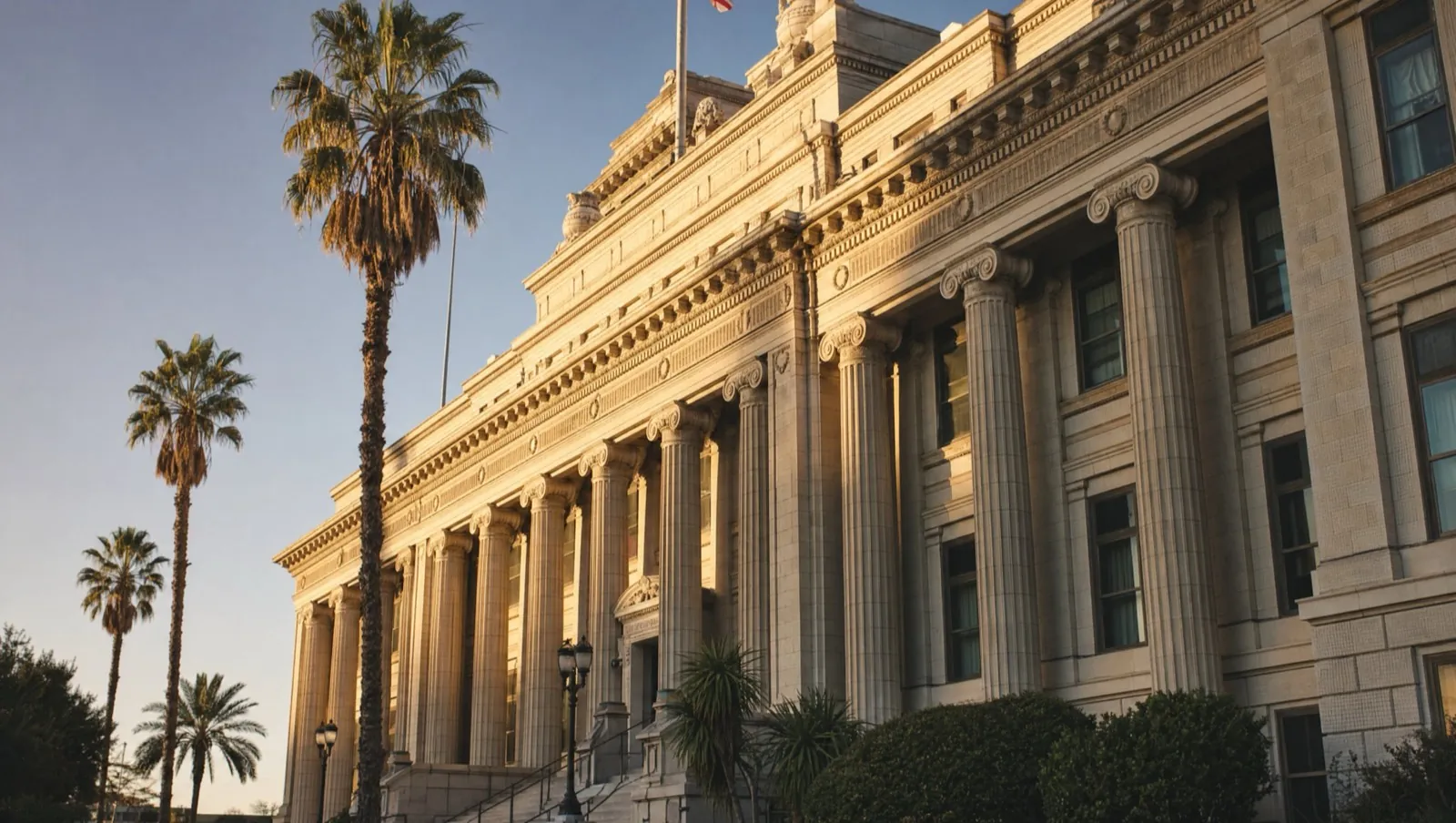
In San Diego County, a Request for Order (RFO) hearing in a family law case is set through the Superior Court of California, County of San Diego. Most RFOs are filed and heard at the Central Courthouse in downtown San Diego or the East County Division in El Cajon. The location depends on where the case is already filed. You start by filing Form FL-300. The clerk gives you a hearing date and department when you file the paperwork at the courthouse. San Diego's online scheduling system for reserving hearing dates covers civil law and motion only, not family law RFOs.
The forms you file with the FL-300 depend on what you ask the judge to decide. If the request involves money, such as child support, spousal support, or attorney's fees, you also file an Income and Expense Declaration (Form FL-150). If the request involves custody or visitation, you file a Family Court Services Screening Form (SDSC Form FCS-46). The court uses that form to schedule a Family Court Services appointment before the hearing. Under Local Rule 5.5.1, San Diego's local rules set a default hearing time limit of 20 minutes unless the RFO states a different limit on its first page.
The notice and response deadlines are the same across California. California Rules of Court, rule 5.92 requires the RFO and supporting papers to be served on the other party at least 16 court days before the hearing. A Responsive Declaration to Request for Order (Form FL-320) is due at least 9 court days before the hearing if the other side wants to respond. In San Diego County, you must also serve the other party with a blank FL-320 and, for financial issues, a blank FL-150, so they have the forms needed to respond.
San Diego Superior Court allows remote attendance for some family law hearings through the free Microsoft Teams app. Department-specific video links are posted on the court's Family Law Hearings page. The court has also used Zoom as a backup when Teams has technical issues. If your RFO involves a contested custody or visitation dispute, Family Code section 3170 requires the case to go through Family Court Services for Child Custody Recommending Counseling before the judge hears it. In San Diego, this counseling is not confidential because any recommendation the counselor makes goes to the court.
Where hearings are held in San Diego County
Family court hearings in San Diego County are held at the Superior Court of California, County of San Diego, with the county seat in San Diego. Because courtroom assignments, remote appearance options, and local procedures change over time, use the official California Courts court finder to confirm current details:
Find the San Diego County Superior Court (official California Courts finder)
How a family court hearing works in California
In California, a party who wants the court to decide something while a case is pending, such as temporary custody, support, or attorney's fees, files a Request for Order (Form FL-300). The core steps are:
- File the Request for Order (Form FL-300) with a supporting declaration and, if support or fees are at issue, an Income and Expense Declaration (Form FL-150).
- Serve the other party by the deadline the court sets, generally at least 16 court days before the hearing (California Rules of Court, rule 5.92).
- The responding party can file a responsive declaration, generally at least 9 court days before the hearing.
- Attend Family Court Services mediation first if custody or visitation is contested.
- Attend the hearing; some courts issue tentative rulings in advance, and some allow remote appearance by video or phone.
Local notes for San Diego County
San Diego County's general family law RFO hearings are handled at two courthouses: the Central Courthouse at 1100 Union Street in downtown San Diego and the East County Division at 250 East Main Street in El Cajon. The North County Courthouse in Vista and the South County Courthouse in Chula Vista both have a Family Law Facilitator's office and Family Court Services. You can get help with paperwork or attend a mediation appointment there. Before you plan to appear in person, confirm with the clerk whether your RFO will be heard at Central or East County.
Rescheduling an RFO hearing date in San Diego County is disfavored. It is granted only for good cause, under Local Rule 5.5.1 and California Rules of Court, rule 5.95. If both sides agree to a new date, you can complete the court's online Notification of Continuance Request / Settlement webform. You must also submit an Agreement and Order to Reschedule Hearing (Form FL-308) or another written stipulation before the hearing date. If the court has not responded to the request by the hearing date, both parties must still appear.
The San Diego Superior Court's Family Law Facilitator's Office can help self-represented parties fill out the Request for Order and related forms. Staff cannot tell you what to ask for or how a judge will rule. Bring an extra copy of every pleading and exhibit to your hearing in case the court file is incomplete. San Diego's local rules note that the court may not have a complete copy on hand.
Official hearing resources in San Diego County
San Diego Superior Court, Central Courthouse (Family Law Division) handles hearings filings, located at 1100 Union Street, San Diego 92101. San Diego Superior Court, East County Division at 250 East Main Street handles Family law RFO hearings for East County cases. San Diego Superior Court, North County Courthouse at 325 South Melrose Drive handles Family Law Facilitator help and Family Court Services mediation appointments; confirm with the clerk whether an RFO in your case is heard here or at the Central Courthouse. San Diego Superior Court, South County Courthouse at 500 Third Avenue handles Family Law Facilitator help and Family Court Services mediation appointments; confirm with the clerk whether an RFO in your case is heard here or at the Central Courthouse.
The filing fee is $60. E-filing is available through https://www.sdcourt.ca.gov/sdcourt/onlineservices/efiling. Filed through court-approved Electronic Filing Service Providers rather than a single court portal.
San Diego Superior Court Family Law Facilitator's Office (https://www.sdcourt.ca.gov/sdcourt/familyandchildren2/divorceandpaternity/osc) can help with procedure and paperwork. Helps self-represented parties prepare Request for Order paperwork and understand hearing procedure; staff cannot give legal advice or predict how a judge will rule. Local Rule 5.5.1 (Hearings on Requests for Orders (RFO), Division V Chapter 5) applies; see https://www.sdcourt.ca.gov/sites/default/files/sdcourt/generalinformation/localrulesofcourt/division_v_-_family_law__2026.pdf.
- Filing a Request for Order (San Diego Superior Court)
- Family Court Services
- Family Law Hearings and Remote Appearance
- Division V Family Law Local Rules (PDF)
- Court Fee Schedule (ADM-001, PDF)
Local details reviewed August 2026. Offices and locations can change, so confirm with the official sites above before you file.
Step-by-step guides for your San Diego County hearing
Get the free California hearing roadmap
A short PDF that walks through how to prepare for your hearing, the forms, and what to expect at the San Diego County courthouse. No spam, one email.
We'll send you the roadmap plus occasional filing guides. Unsubscribe anytime.
San Diego County RFO Hearing FAQs
Where do I file for a hearing or Request for Order in San Diego County?
You file Form FL-300 with the Superior Court of California, County of San Diego. In most cases, you file at the Central Courthouse in downtown San Diego or the East County Division in El Cajon, depending on where your case is filed. The clerk gives you a hearing date and courtroom when you file. If the case involves money issues, you also file Form FL-150. If it involves custody or visitation, you file the Family Court Services Screening Form (FCS-46).
How much does it cost to file a Request for Order in San Diego County?
The base filing fee for a motion or Request for Order in a San Diego family law case is $60, under Government Code section 70677(a). If your RFO asks the court to modify or enforce a custody or visitation order, you must pay an additional $25 fee under Government Code section 70678. If you cannot afford the fees, you can ask to waive them with a Request to Waive Court Fees (Form FW-001).
Do I have to go to mediation before a custody hearing in San Diego County?
Yes, if custody or visitation is contested. Family Code section 3170 requires the case to go through Family Court Services for Child Custody Recommending Counseling before the judge hears a contested custody or visitation RFO. In San Diego County, this counseling is not confidential. If you and the other parent do not reach an agreement, the counselor's recommendation is sent to both parents and the court.
Can I appear at my San Diego County family law hearing remotely?
In many cases, yes. San Diego Superior Court allows remote appearance for some family law hearings through the free Microsoft Teams app. Department-specific links are posted on the court's Family Law Hearings page. Zoom is used as a backup when Teams has technical problems. Check the posted link for your specific courtroom on the day of your hearing because links can change. Log in or arrive early.
How much notice do I have to give before an RFO hearing in San Diego County?
California Rules of Court, rule 5.92 sets the notice period statewide, including in San Diego County. The Request for Order and supporting papers must be served on the other party at least 16 court days before the hearing. The other party then has until at least 9 court days before the hearing to file and serve a Responsive Declaration to Request for Order (Form FL-320).
What if I need to reschedule my RFO hearing in San Diego County?
San Diego's Local Rule 5.5.1 disfavors rescheduling and allows it only for good cause under California Rules of Court, rule 5.95. If both parties agree, you can complete the court's online Notification of Continuance Request / Settlement webform and file an Agreement and Order to Reschedule Hearing (Form FL-308) before the hearing date. If the court has not ruled on the request by then, both parties must still attend the original hearing.
This page is general information about California family court hearing procedure in San Diego County, not legal advice for your situation. Deadlines, local rules, and courtroom procedures change; always confirm current details with the Superior Court of California, County of San Diego or the official California self-help center resources. Virdix is not a law firm and is not a substitute for an attorney.
Hearing guides for nearby counties
Preparing for a hearing in San Diego County
Virdix guides you through the Judicial Council forms your hearing needs, so your paperwork is complete and consistent before you file.
If the court clerk rejects a document we prepared, we fix it for free until it's accepted. See how the guarantee works