
Legal parentage decides who counts, in the eyes of California law, as a child's parent, and it is a separate legal question from custody, visitation, or child support. Those things can only be requested or ordered once parentage is actually established. California recognizes two distinct paths to get there: a signed Voluntary Declaration, or a court case.
Key Takeaway: California parentage can be established through a Voluntary Declaration of Parentage (VDOP), which both parents sign, most commonly at the hospital, or through a court case opened with Form FL-200. A child born during an existing marriage is usually already covered by the marital presumption under Family Code Section 7540, so a standalone parentage case is more commonly relevant for unmarried parents or genuinely disputed situations. Once parentage is established, custody, visitation, and child support can then be requested or ordered.
What Is Legal Parentage in California?
"Parentage" is the legal term for who is recognized as a child's parent under California law. It is a threshold question: a court generally cannot order custody, visitation, or child support for someone until that person's legal parentage of the child is established, either automatically through a recognized presumption, through a signed declaration, or through a court judgment.
Parentage matters for both married and unmarried parents, though it works differently depending on the situation. For a child born during a marriage, the marital presumption discussed below often already resolves the question, and if that marriage is also ending, our guides to California divorce papers and getting divorced without a lawyer in California cover the filing process for the divorce case itself. For unmarried parents, or for anyone specifically trying to establish or challenge who a child's legal parent is, California provides two separate paths: a Voluntary Declaration of Parentage, or a court petition.
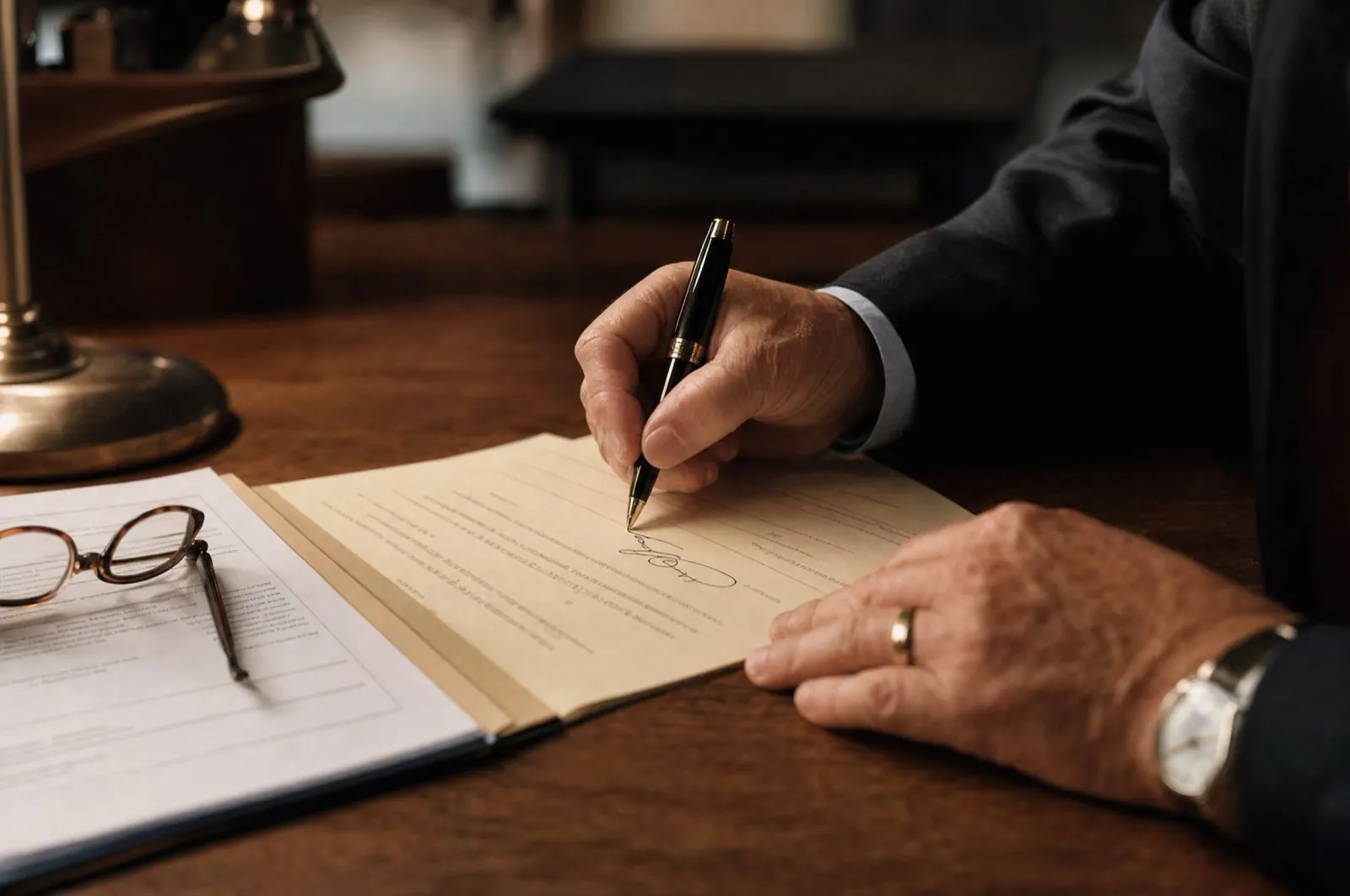
Path One: The Voluntary Declaration of Parentage
The Voluntary Declaration of Parentage (VDOP) is a form both parents can sign to legally establish parentage without going to court. It is most commonly signed at the hospital at the time a child is born, though it can also be signed later, outside the hospital setting.
A few key points about how a VDOP works:
- Both parents sign the declaration, acknowledging the parent-child relationship
- Once properly filed, a VDOP carries the same legal weight as a court judgment establishing parentage
- Either parent can rescind the declaration within a limited window if they change their mind after signing
Because the exact number of days in that rescission window is not something we can confirm as currently accurate, this guide does not state a specific figure. If you are considering rescinding a VDOP, or want to know how much time you have, confirm the current rescission period with the Department of Child Support Services or your county self-help center before relying on any particular deadline.
A VDOP is generally the simpler, faster path when both parents agree on parentage and want to avoid opening a court case. It does not, on its own, decide custody, visitation, or child support; those are separate requests that can be made once parentage is on file, whether through a VDOP or through the court process described below.
Path Two: A Court Petition (Form FL-200)
When there is no signed Voluntary Declaration, or when parentage needs to be resolved through the court for another reason, the case is opened with Form FL-200, Petition to Determine Parental Relationship.
The core forms in a court parentage case are:
- Form FL-200, the Petition that opens the case
- Form FL-210, the Summons used in a parentage case
- Form FL-220, the Response
As stated by the California Courts Self-Help Center, a respondent in a parentage case generally has 30 days to file a Response, mirroring the divorce timeline. If no Response is filed, the Petitioner can ask the court to decide without the respondent's input, a default outcome. That default mechanic works conceptually the same way it does in a divorce case, though the specific forms used to request a default in a parentage case may differ from the divorce default forms; see the default-risk section below for how that parallel works and what to confirm before assuming which forms apply.
Form FL-600: Parentage Cases Opened by a Local Child Support Agency
Not every parentage case starts with a private FL-200 petition. Form FL-600, Summons and Complaint Regarding Parental Obligations, is used specifically when a local child support agency (DCSS) initiates a parentage and support case, rather than one of the parents filing on their own.
This is a distinct path from a privately filed FL-200 petition: the local child support agency is the one bringing the case, generally in connection with establishing or enforcing child support obligations, rather than a parent independently asking the court to determine parentage. If you receive papers referencing Form FL-600, that indicates a child support agency has opened the case, which is a different starting point than the FL-200 process described above, even though both paths lead to a legal determination of parentage.
The Marital Presumption and How It Interacts With Divorce
For a child born during an existing marriage, parentage is often not an open question at all. California Family Code Section 7540(a) states that a child of spouses who cohabited at the time of conception and birth is conclusively presumed to be a child of the marriage. Section 7540(b) allows a narrow exception, but it is not something to detail here; the practical point is simply that the presumption is not absolute in every circumstance.
This presumption can be challenged, but only in a limited way. Family Code Section 7541 allows the presumption to be challenged only by the spouse, by a person who is a presumed parent under Family Code Section 7611, or by the child through a guardian ad litem. The challenge must be filed and served within 2 years of the child's birth, supported by a sworn declaration stating the factual basis, and can involve genetic testing.
Because the group of people who can raise a challenge, and the window for doing so, are both narrow, the marital presumption is the answer in the large majority of cases involving a child born during a marriage. This is why parentage for a child born during an existing marriage is usually not a separate open question: the marriage itself generally already answers it, and a standalone FL-200 parentage case is more commonly relevant for unmarried parents, or for situations where someone is specifically trying to challenge or establish parentage outside of a marriage.
If a divorce is happening around the same time as a pregnancy or a recent birth, our guide to being pregnant during a divorce in California covers how the marital presumption interacts with an active divorce case, including how custody and support for that child are generally handled inside the same divorce case rather than as a separate parentage proceeding.
Genetic Testing in a Disputed Parentage Case
When parentage is genuinely disputed, whether inside a challenge to the marital presumption or in a standalone FL-200 case involving unmarried parents, a court can order genetic testing. Genetic testing is a real tool available to the court in these cases.
It is worth being precise about what that means, though: genetics is not the court's only consideration in every context. A judge weighs the full circumstances relevant to determining legal parentage, not simply a lab result in isolation. What those broader circumstances look like in a specific case, and how much weight a lab result carries against them, depends on the facts of that case; this guide does not attempt to describe a specific legal test beyond that general point, since a more detailed standard is not something we have a sourced citation for here. If genetic testing is relevant to your situation, that is a conversation worth having directly with the court or a family law attorney.
The Response Window and the Default Risk
The default mechanic in a parentage case works conceptually the same way it does in a divorce case, and it is worth understanding the parallel even though the underlying case type is different.
In a divorce, once a Respondent is served and the 30 day Response window passes with nothing filed, the Petitioner can request a default using Form FL-165, and the case can proceed toward judgment largely on what the Petition asked for. Our guides to default divorce in California and Form FL-165, Request to Enter Default, walk through that mechanic in full.
In a parentage case, the same underlying concept applies: once a respondent is served with the FL-200 Petition and FL-210 Summons and the 30 day Response window passes with no FL-220 filed, the Petitioner can ask the court to decide without the respondent's input, a default outcome. What is genuinely different is the paperwork: Virdix has not sourced the specific default forms used in a parentage case, and they may not be identical to FL-165 and FL-170 used in a divorce default. Rather than guess at form numbers, the accurate guidance here is to confirm the current parentage-case default forms and process with the court before relying on any particular form.
What Happens Once Parentage Is Established
Establishing parentage, whether through a Voluntary Declaration, the marital presumption, or a court judgment following an FL-200 case, is what unlocks the next set of legal questions. Once parentage is on file:
- Custody and visitation can be requested or ordered, following California's best interest of the child standard; see our custody hub for the general framework
- Child support can be requested or ordered, following California's child support guidelines; see our child support hub for the general framework
Parentage itself does not resolve custody, visitation, or support automatically. It is the legal foundation that has to be in place before a court can address those issues, or before an agency like the Department of Child Support Services can pursue a support order tied to that parent-child relationship.
Common Mistakes to Avoid
- Assuming a Voluntary Declaration and a court judgment are different in legal weight; a properly filed VDOP carries the same legal weight as a court judgment establishing parentage
- Assuming a specific rescission deadline applies to a VDOP without confirming the current window with the Department of Child Support Services or a county self-help center
- Opening a standalone FL-200 case for a child already covered by the marital presumption, when the marriage itself likely already establishes parentage
- Assuming the divorce default forms (FL-165, FL-170) apply directly to a parentage case without confirming the correct forms with the court
- Assuming a court will decide parentage on genetic test results alone, without regard to the broader circumstances of the case
- Confusing Form FL-600, used by a local child support agency, with a privately filed FL-200 petition; they are different starting points for a parentage case
Frequently Asked Questions
What is the difference between a Voluntary Declaration of Parentage and a court parentage case?
A Voluntary Declaration of Parentage (VDOP) is a form both parents sign, most commonly at the hospital when a child is born, though it can also be signed later. Once properly filed, it carries the same legal weight as a court judgment establishing parentage, without ever going to court. A court parentage case, opened with Form FL-200, is used when there is no signed declaration, when parentage is disputed, or when a party wants a court to also address custody, visitation, or support.
Can a Voluntary Declaration of Parentage be undone after it is signed?
Either parent can generally rescind a Voluntary Declaration within a limited window after signing if they change their mind. Because the exact number of days in that window is not something we can confirm as currently accurate, check the current rescission period with the Department of Child Support Services or your county self-help center before relying on a specific deadline.
What forms are used in a California parentage case?
Form FL-200, Petition to Determine Parental Relationship, opens the case. Form FL-210 is the Summons used in a parentage case, and Form FL-220 is the Response. A parentage case opened specifically by a local child support agency instead uses Form FL-600, Summons and Complaint Regarding Parental Obligations, rather than a private FL-200 petition.
How long does a respondent have to answer an FL-200 parentage petition?
As stated by the California Courts Self-Help Center, a respondent generally has 30 days to file a Response (Form FL-220), mirroring the timeline used in divorce cases. If no Response is filed, the Petitioner can ask the court to decide without the respondent's input. The specific default forms used in a parentage case may differ from the divorce default forms, so confirm the current forms with the court.
Is a standalone parentage case necessary for a child born during a marriage?
Usually not. Under Family Code Section 7540(a), a child of spouses who cohabited at the time of conception and birth is conclusively presumed to be a child of the marriage. That marital presumption generally already answers the parentage question, so a standalone FL-200 case is more commonly relevant for unmarried parents, or when someone is specifically trying to challenge or establish parentage outside of a marriage.
Does a court always order genetic testing in a parentage case?
A court can order genetic testing when parentage is disputed, but genetics is not the only consideration in every context. A judge weighs the full circumstances relevant to determining legal parentage, not simply a lab result.
How Virdix Helps
Establishing parentage the right way, through the correct path for your situation, is what makes custody and child support requests possible down the line. Virdix helps by:
- Guiding you through the FL-200 petition, FL-210 Summons, and FL-220 Response in plain language
- Keeping your case details consistent, so information about the child and the parents stays accurate across every form
- Preparing custody and child support paperwork once parentage is established and you are ready to request those orders
Virdix does not decide which path (a Voluntary Declaration or a court petition) is right for your situation, does not represent you in a disputed parentage matter, and does not provide legal advice. For questions about VDOP rescission windows, current parentage-case default forms, or a genuinely disputed parentage matter, confirm with the Department of Child Support Services, your county self-help center, or a licensed California family law attorney.
Start Your California Paperwork →
This article is for informational purposes only and does not constitute legal advice. Virdix is a document preparation service, not a law firm, and does not provide legal advice. For advice about your specific situation, consult a licensed California family law attorney.
Sources: California Family Code Sections 7540 and 7541 (leginfo.legislature.ca.gov), California Courts Self-Help Center (selfhelp.courts.ca.gov), Department of Child Support Services (childsupport.ca.gov), Judicial Council of California