
Yes, you can file for divorce online in California, and most people who search that question actually mean one of two different things: preparing your paperwork online, or electronically filing it with the court. Both are real, both are legal, and this guide walks through exactly how each one works.
Quick Answer: Yes. California lets you prepare your divorce paperwork online through a guided document preparation service, and most Superior Courts accept e-filing so you can submit that paperwork electronically instead of appearing in person. Online divorce is legal, does not require a lawyer, and works well for uncontested, cooperative cases, but it does not shorten the mandatory 6 month waiting period and is not the right tool for contested cases or situations involving domestic violence.
Short Answer: Yes, With Two Different Meanings
"Filing for divorce online in California" usually gets asked about one of two separate things:
- Preparing your divorce forms online. Using a guided questionnaire that turns the official Judicial Council forms (FL-100, FL-110, financial disclosures, and so on) into plain-language questions, instead of a blank PDF you fill out yourself.
- Submitting your paperwork to the court online. Also called e-filing, this is uploading your signed, completed forms through the Superior Court's electronic filing system instead of physically bringing them to a courthouse window.
You can do either one on its own, or both together. Neither one changes what the court requires. For a broader look at whether an online document preparation service is the right choice for your situation, see Online Divorce in California: Is It Worth It?. This guide focuses specifically on the mechanics: how each piece actually works, and which counties support it.
What "Filing for Divorce Online" Actually Means
Every California divorce, prepared online or on paper, goes through the same Superior Court process. A Petition (Form FL-100) opens the case, the other spouse is served and generally has 30 days to respond, financial disclosures are exchanged, a mandatory 6 month waiting period runs from the date of service, and a judgment finalizes the case.
Filing online does not create a separate, faster legal track. It changes how you complete and submit paperwork, not what the paperwork has to say or how long the case takes.
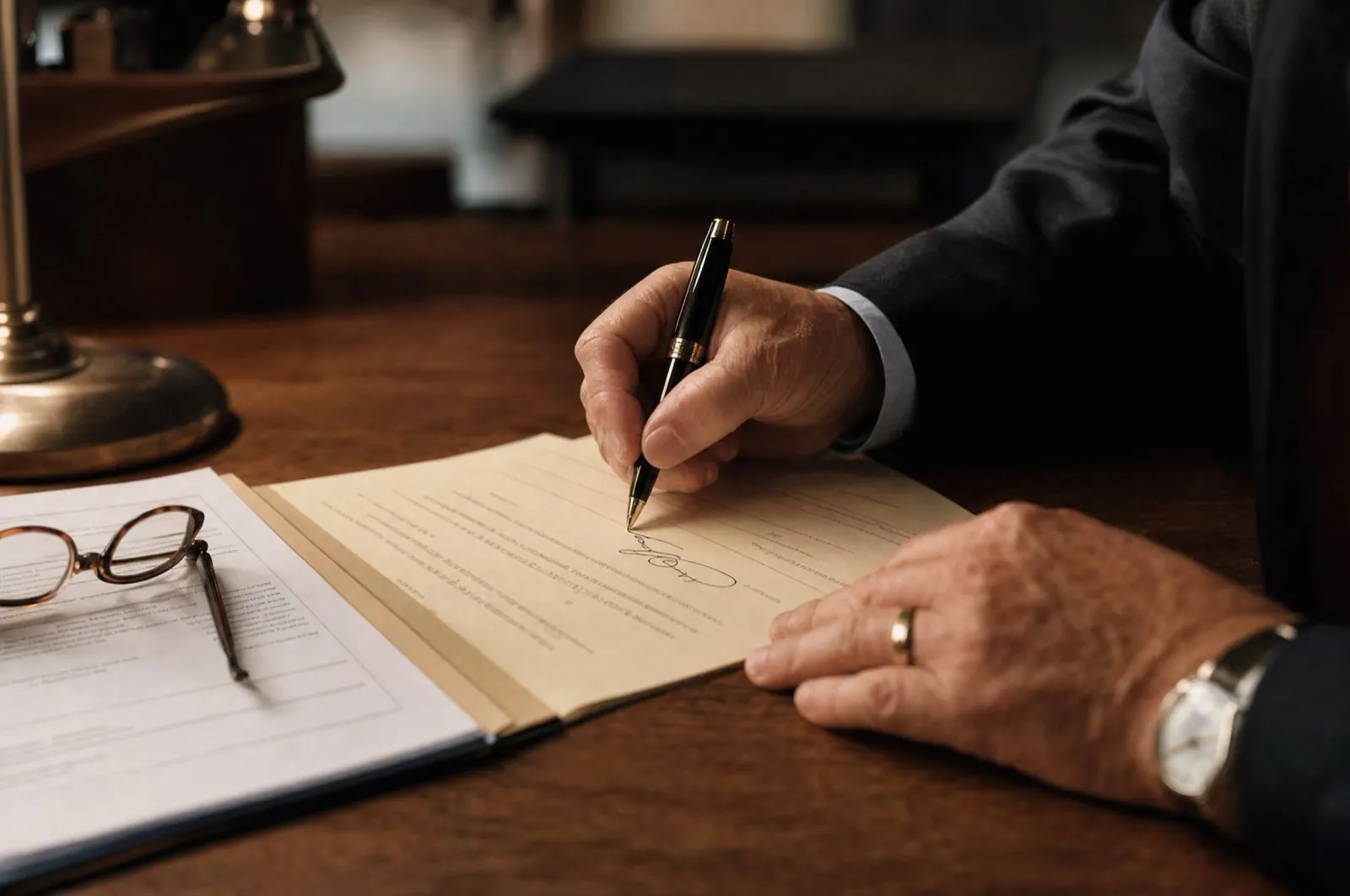
How Online Document Preparation Works
An online document preparation service, like Virdix, replaces the blank Judicial Council PDF with a guided interview:
- You answer plain-language questions instead of decoding legal form fields
- Your answers carry across every related form, so names, dates, and figures stay consistent
- The service checks for missing signatures, blank required fields, and other completeness issues before you file
- You receive completed, court-ready forms, either to print and file in person or to submit through e-filing
In California, a company doing this without being a law firm is generally operating as a document preparation service, and in many counties this role can be filled by a licensed Legal Document Assistant (LDA). It prepares documents based on what you tell it. It does not advise you on what to ask for, and it cannot represent you in front of a judge.
How E-Filing Works, and Which Counties Support It
Once your forms are complete, most California Superior Courts let you submit them electronically instead of filing in person. E-filing generally works through a court-approved electronic filing service provider (an e-filing portal the court has authorized), which timestamps your submission, routes it to the clerk, and returns confirmation once it is accepted.
E-filing availability and rules vary by county:
- Larger counties generally support it. Los Angeles, Orange, San Diego, Riverside, San Bernardino, San Francisco, Santa Clara, and Alameda Superior Courts all accept electronic filing for family law cases through their approved e-filing providers.
- Rules differ for attorneys versus self-represented filers. Some counties, including Orange and Riverside, require attorneys to e-file family law documents but leave it optional for self-represented parties, who can still file on paper if they prefer. Others, including San Diego, let both attorneys and self-represented filers e-file family law cases.
- Some smaller counties do not yet offer it for family law. Not every California Superior Court has rolled out family law e-filing, so it is not safe to assume it is available everywhere.
E-filing rules and available providers change by county and over time. Before you count on e-filing your divorce paperwork, confirm your specific county Superior Court's current e-filing policy and approved provider on that court's own website, since this guide cannot track every county's requirements in real time.
If your county does not support e-filing, or you would rather not use it, filing in person at the courthouse clerk's window remains available everywhere in California and works exactly the same way for your case.
Is Online Divorce Legal and Safe in California?
Yes. California does not require you to hire an attorney to file for divorce, and every Superior Court accepts self-represented filings. The Judicial Council forms are the same forms whether you complete them with a pen at the courthouse, alone at your kitchen table, or with a guided online service. What makes a filing valid is that the forms are accurate, signed, and filed correctly, not who typed them.
Safety and legality are two different questions, though. An online divorce service is legal as a document preparation tool, and it is safe in the sense that it does not put your legal rights at risk any more than filling out the same paper forms yourself would. What it cannot do is give you legal advice or evaluate whether your specific requests are wise. That distinction matters more as your situation gets more complicated.
Does Online Divorce Actually Work?
For an uncontested, cooperative case, yes, and in a very literal sense: the same court reviews the same forms and issues the same kind of judgment, regardless of how the paperwork was prepared or submitted. "Online divorce" is not a shortcut around the legal process, and no legitimate service claims to finalize a California divorce with no court involvement at all.
What online preparation and e-filing genuinely change is friction: less time spent decoding form language, fewer trips to the courthouse, and fewer rejected filings due to missing signatures or inconsistent information across forms.
Filing Online Does Not Shorten the 6 Month Waiting Period
California imposes a mandatory minimum 6 month waiting period before any divorce can become final, running from the date your spouse is formally served (not from the date you filed, and not from the date you submitted anything online). Preparing your paperwork online or e-filing it does not start this clock any earlier or run it any faster. It only affects how the paperwork gets created and submitted, not the calendar.

When Filing Online Is Not the Right Fit
Online preparation and e-filing solve a paperwork problem, not a legal or safety problem. Some situations call for an attorney regardless of how you plan to file:
- Any history of domestic violence, threats, or coercive control between you and your spouse
- A contested custody dispute, or disagreement over where a child will live
- Suspected hidden assets, a business that needs to be valued, or significant retirement accounts
- Your spouse has already hired an attorney
- Meaningful disagreement over support or property division
If you are experiencing domestic violence or feel unsafe, contact the National Domestic Violence Hotline at 1-800-799-7233 or your local court's self-help center for resources, and speak with a licensed attorney before proceeding with any paperwork, online or otherwise.
None of this means online tools are flawed for these cases, it means the tool is solving the wrong problem. A document preparation service, however well it e-files a form, cannot negotiate custody, value a business, or protect you in a contested hearing.
How to Actually File for Divorce Online, Step by Step
If your case is uncontested and cooperative, here is what filing online looks like in practice:
- Confirm you meet California's residency requirement. Generally, you or your spouse must have lived in California for the last 6 months and in your current county for the last 3 months.
- Complete your Petition and related forms online, using a guided document preparation service so your answers stay consistent across every form.
- Check whether your county accepts e-filing for family law cases, and if so, whether self-represented filers can use it directly or need to file in person instead.
- File and pay the fee (or submit a fee waiver). The statewide filing fee generally runs $435 to $450 depending on county, and Form FW-001 can waive or defer it if you qualify.
- Serve your spouse. However you filed, someone 18 or older who is not a party to the case still has to formally serve your spouse with the filed Petition and Summons.
- Wait out the 6 month period, then finalize. Once the waiting period passes and any remaining paperwork (disclosures, judgment forms) is complete, the case can be finalized.
For the complete statewide process, including what happens after you file and how service works, see How to File for Divorce in California Without a Lawyer.
Frequently Asked Questions
Can you file for divorce online in California?
Yes, in two ways that are often confused. First, you can prepare your divorce paperwork online, using a guided document preparation service that turns the official Judicial Council forms into a plain-language questionnaire. Second, in most California counties you can then e-file that paperwork electronically with the Superior Court instead of filing it in person. Neither step replaces the underlying court process: you still complete the same forms, pay the same filing fee (or request a waiver), and wait out the same mandatory 6 month period.
Is online divorce legal in California?
Yes. California does not require an attorney to file for divorce, and self-represented filers can prepare their own paperwork however they choose, including with a document preparation service, then file it either in person or electronically where the court accepts e-filing. What is not legal is a service claiming to give you legal advice, or to guarantee an outcome, unless it is an actual licensed attorney. A document preparation service can only prepare forms based on information you provide.
Does online divorce actually work in California?
For an uncontested, cooperative case, yes: the paperwork gets filed, processed, and finalized the same way it would if you filled it out by hand at the courthouse. What "online divorce" cannot do is skip any part of the underlying legal process. There is no version of a California divorce, online or otherwise, that avoids the Petition, the Summons, service on your spouse, the 6 month waiting period, and a final judgment.
Which California counties let you e-file a divorce?
Most of the larger Superior Courts, including Los Angeles, Orange, San Diego, Riverside, San Bernardino, San Francisco, Santa Clara, and Alameda, accept electronic filing for family law cases through a court-approved e-filing service provider. Rules differ by county: some require attorneys to e-file while leaving it optional for self-represented parties, and a number of smaller, more rural counties do not yet offer family law e-filing at all. Confirm your specific county Superior Court's current e-filing policy before you rely on it.
Do I need a lawyer to file for divorce online in California?
No. Filing online, whether that means using a document preparation service, e-filing, or both, does not require an attorney. It also does not replace one. If your case is contested, involves complex assets, or involves domestic violence, filing "online" solves the paperwork problem but not the legal or safety problem, and you should speak with a licensed California family law attorney.
Can both spouses file for divorce online together in California?
Yes, if you agree on everything. Since January 1, 2026, California couples who agree on all terms can file a Joint Petition (Form FL-700) together, which skips the Petitioner/Respondent structure, service, and the 30 day response window entirely. This can also be prepared and filed online. See our guide on [how to file a joint divorce petition in California](/blog/how-to-file-a-joint-divorce-petition-california-fl-700).
How Virdix Helps
Virdix is a California-focused document preparation service built for exactly this: turning the official Judicial Council forms into a guided, plain-language questionnaire so your paperwork is complete and consistent before you file, online or in person.
- Guided questionnaire, no decoding legal form language
- Consistency checks, your answers carry through every related form automatically
- County-specific instructions, including current filing fees for your Superior Court
- Honest scope, we tell you when your situation looks like it needs an attorney instead
Start Your California Divorce Paperwork →
This article is for informational purposes only and does not constitute legal advice. Virdix is a document preparation service, not a law firm, and does not provide legal advice. E-filing availability and requirements vary by county and change over time; confirm current policy directly with your county Superior Court. For advice about your specific situation, consult a licensed California family law attorney.
Sources: California Courts Self-Help Center (selfhelp.courts.ca.gov), Judicial Council of California, Orange County Superior Court (occourts.org), San Diego Superior Court (sdcourt.ca.gov), Alameda County Superior Court (alameda.courts.ca.gov), Riverside County Superior Court (riverside.courts.ca.gov)