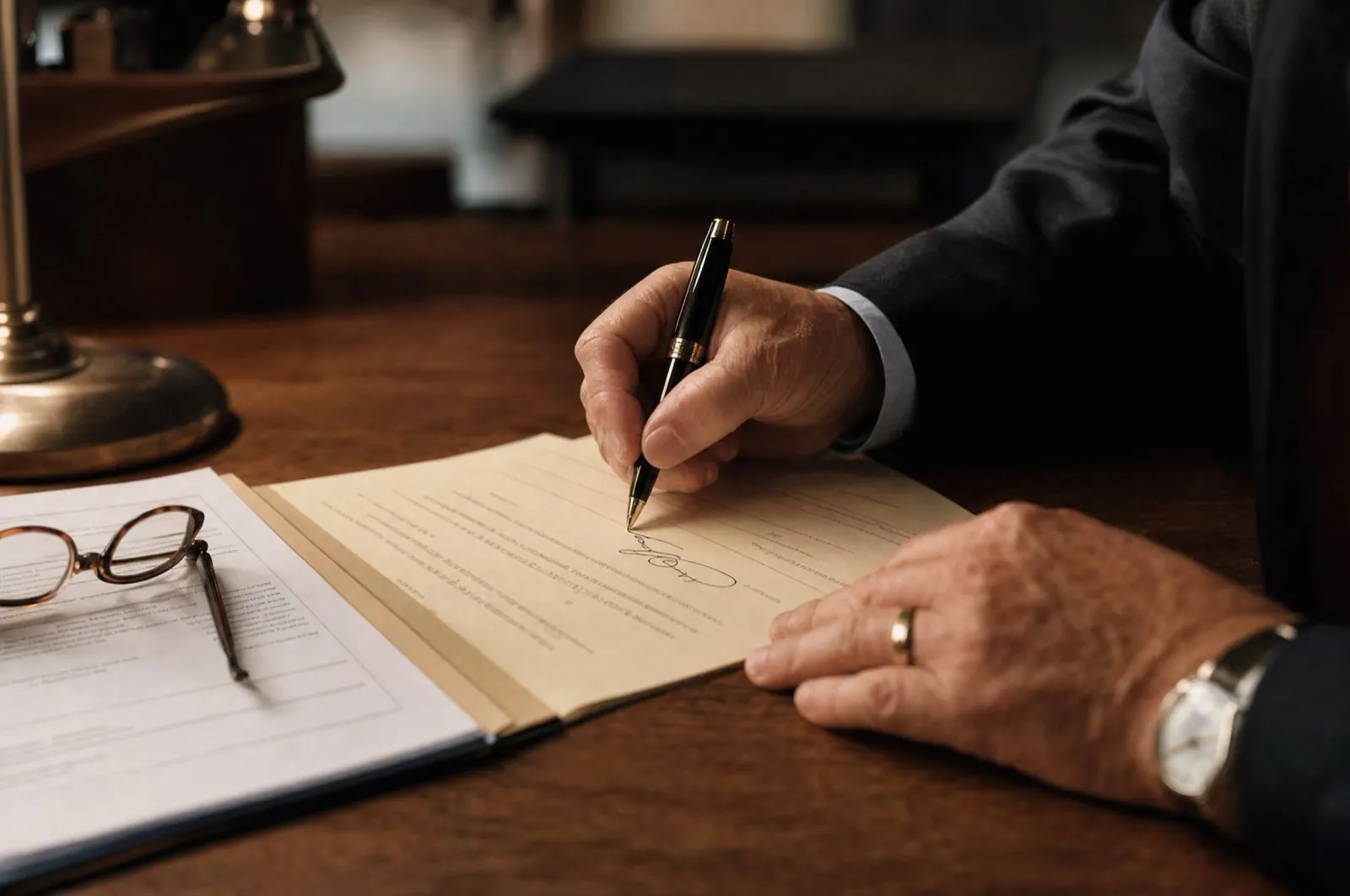
Divorce papers are the official court forms that start, document, and finalize your case: a petition, a summons, financial disclosure forms, and eventually a judgment. Every state uses its own numbered versions of these same basic documents. This guide explains what each one does, how to fill them out yourself, and what changes once you look specifically at California and Florida.
Key Takeaway: Every divorce case runs on the same core paperwork: a petition that opens the case, a summons that notifies your spouse, financial disclosure forms, and a final judgment. The specific form numbers and instructions differ by state, and a free printable form only gets you a blank template, not the guidance on which version fits your situation or whether your answers are consistent across every form.
What Are Divorce Papers, Exactly?
Divorce papers, sometimes called a divorce package or divorce kit, refer to the full set of court forms a case requires from start to finish, not a single document. At minimum that includes a petition (called a complaint, or an original petition for divorce, in some states), a summons, and eventually a proposed judgment. Most cases also require financial disclosure forms and, if children are involved, a parenting plan or custody worksheet.
What final divorce papers look like once a case is done is a signed judgment, sometimes with a marital settlement agreement or property division worksheet attached, filed permanently in the court record. Divorce templates and generic divorce agreement letters found outside the official court system are not a substitute for the state's actual numbered forms, since a court can only accept the current, official version.
Free, Printable Divorce Forms and Their Limits
Every state publishes its official divorce forms for free, directly through the state court system, so paying a third party just to access a blank template is never necessary. Free printable divorce papers, free downloadable divorce papers, and free online divorce documents typically point back to these same official, no-cost forms.
Where a free do-it-yourself divorce form falls short is guidance: a blank PDF does not tell you which version applies to your case (an uncontested versus regular petition, for example), does not check that your answers stay consistent from one form to the next, and does not confirm you have the right form for children versus no children, or for a fault versus no-fault filing where that distinction still applies. That is the gap document-preparation software and self-help centers are built to close.
How to Fill Out Divorce Papers Yourself
Most official forms come with an instructions packet explaining every field, and reading that packet first, before filling anything in, prevents the most common mistakes. Filling out divorce papers yourself generally means working through the petition, the summons, and any financial disclosure forms in order, using your marriage date, your spouse's information, and a clear list of what you are asking for.
Help filling out divorce papers is available for free at your court's self-help center, though staff there answer procedural questions rather than filling out forms for you or giving legal advice. Document-preparation software like Virdix asks the same information in plain language, then generates the completed, official forms from your answers, checking that names, dates, and requests match across every document in your case.
Financial Disclosure and Affidavit Forms
Most divorce cases, uncontested or not, require both spouses to file a sworn financial affidavit (called a Declaration of Disclosure in California, a Family Law Financial Affidavit in Florida) listing income, expenses, assets, and debts. This is the divorce financial disclosure form that lets property, support, and debts get divided based on real numbers.
Florida splits its financial affidavit by income: an individual earning under $50,000 a year files the short form, Form 12.902(b), and $50,000 or more files the long form, Form 12.902(c), with both forms covering the same categories at different levels of detail. Some uncontested cases let both spouses waive the financial affidavit requirement in writing, though this option and its rules vary by state.
Serving Papers and Proof of Service
Getting served papers means someone (a sheriff, process server, or another qualifying adult) formally delivers your spouse's petition and summons to you, putting you on legal notice that a case has been filed. Whoever serves the documents then signs a proof of service, sometimes called an affidavit of service, that goes back to the court confirming when and how service happened.
If you and your spouse are cooperative, a waiver of service can replace formal delivery: your spouse signs a form acknowledging the case and skips the cost of a process server, while still being legally notified. Courts generally will not move a case forward, or enter a default, without a valid proof of service or signed waiver on file.
Responding to a Divorce Petition
Once served, the person on the receiving end (the Respondent) generally has a set number of days, which varies by state, to file a written Answer, sometimes called a Response. In Florida, that window is 20 days from service. An Answer responds to what the petition asked for; a Respondent who also wants the court to order something specific (a particular property division, or a support amount, for example) generally files a Counterpetition alongside it.
If the deadline passes with no response, the case can generally proceed toward a default judgment, decided without the Respondent's input on the terms, so it is worth acting before that window closes even in a case you plan to agree with. A Petitioner can also file a dismissal of the case, or an amended petition, if the situation changes before judgment.
Getting Divorce Papers Online
You can access, fill out, and often e-file divorce papers online, but "online divorce papers" always trace back to the same official forms your state court publishes, filed through the same court every other case in that state goes through. Be cautious of any site offering online divorce papers that look generic, are not labeled with your state's actual current form number, or seem designed to look official without being the real thing; a court can reject a filing that does not match the current version of a required form.
Intake Forms and Document Assembly Software
Some document-preparation services and family law firms use a family law intake form, or family law intake questionnaire, to gather your basic information (names, marriage date, children, assets) before generating your actual court forms. This intake step is not itself a court filing, it is how your answers feed into document assembly software that produces the official petition, summons, and disclosure forms in the correct format for your state.
Divorce Papers in California
California's core divorce papers start with Form FL-100 (Petition) and Form FL-110 (Summons), followed by financial disclosure on Forms FL-140, FL-142, and FL-150, a Response on Form FL-120 if the other spouse contests anything, and eventually a Judgment. California's self-help center publishes every current form for free through its Find Court Forms index.
Our guide to California divorce forms walks through the full list, form by form, in the order you are likely to need them.
Divorce Papers in Florida
Florida's core papers include the Joint Petition for Simplified Dissolution, Form 12.901(a), for fully agreed cases with no children, or a regular Petition, Form 12.901(b)(1) through (3), depending on children and property. A Respondent answers using the Form 12.903 series, generally within 20 days of service, and both spouses typically file the appropriate Financial Affidavit, Form 12.902(b) or (c).
Our guide to Florida divorce forms covers the complete Florida form list and which version fits your situation.
Divorce Papers in Any Other State
Every state publishes its own numbered forms for the same core documents (petition, summons, financial disclosure, and judgment), and a handful of states, such as Massachusetts, publish theirs directly through a state government portal rather than a dedicated self-help site. What always varies is the exact form numbers, the required financial disclosure format, and the response deadline after service, so a California or Florida form is never a substitute for your own state's official version. Confirm the current forms for your state through its court self-help website before filing. Our divorce by state directory is a starting point.
Frequently Asked Questions
What do divorce papers actually look like?
They are official, numbered court forms, not a generic letter or contract. A petition (or complaint) states who is asking for the divorce and what they are asking for. A summons formally notifies the other spouse. A financial affidavit or declaration lists income, expenses, assets, and debts. Each state uses its own numbered forms for these documents; California's petition is Form FL-100, Florida's is Form 12.901(b)(1) or the joint Form 12.901(a).
Can I get free printable divorce papers online?
The official forms themselves are free and published directly by the state court system, so you never have to pay a third-party site just to access a blank form. What a free printable form does not do is fill itself out correctly or tell you which version applies to your situation. That is where document-preparation software or a self-help center adds value beyond a blank PDF.
How do I fill out divorce papers myself, without a lawyer?
Read the instructions packet that comes with each official form, since most state court forms include one explaining every field. Fill in your names, marriage date, and requests exactly as the form asks, gather the financial documents you'll need for the disclosure forms, and check your state court self-help website for a checklist matching your specific case type. Many people complete their own paperwork this way; document-preparation software checks your answers for consistency across forms before you file.
What is a financial affidavit and do I have to file one?
A financial affidavit (called a Declaration of Disclosure in California and a Family Law Financial Affidavit in Florida) is a sworn statement of your income, expenses, assets, and debts. Most divorce cases require one from both spouses so property and support can be based on real numbers. Florida sorts its financial affidavit by income: under $50,000 a year uses the short form, Form 12.902(b), and $50,000 or more uses the long form, Form 12.902(c). Some uncontested cases allow both spouses to waive this requirement in writing.
What happens after I am served with divorce papers?
Being served starts a countdown to respond, and the deadline is set by the state where the case was filed, not by you. In Florida, you generally have 20 days to file a written Answer. Missing the deadline does not stop the divorce, it generally means the case can proceed toward a default judgment without your input on the terms, so it is worth acting before the window closes even if you plan to agree with everything.
Is it safe to download divorce papers from any website?
Stick to your state court's own website, or a document-preparation service that generates the current, official version of each form. Some third-party sites host outdated or altered forms, and a court can reject paperwork that does not match the current version. If a site's papers look unusual, generic, or are not labeled with your state's actual form number, confirm against your state court's self-help site before filing.
How Virdix Helps
Virdix asks you plain-language questions, then generates the current, official California or Florida court forms from your answers, checking that names, dates, and financial figures stay consistent across your entire case before you file. Pricing is $79 through October 31, 2026.
Virdix does not replace an attorney for a contested case, a dispute over the forms themselves, or any situation involving your safety.
This article is for informational purposes only and does not constitute legal advice. Virdix is a document preparation service, not a law firm, and does not provide legal advice. For advice about your specific situation, consult a licensed family law attorney in your state.
Sources: California Courts Self-Help Center (selfhelp.courts.ca.gov), Florida Courts Family Law Forms (flcourts.gov), Florida Family Law Rules of Procedure Forms 12.901(a) and 12.903 (flcourts-media.flcourts.gov)